Understanding 3A and 3B MEWPs
Understanding 3A and 3B MEWPs: Choosing the Right Mobile Elevating Work Platform
Mobile Elevating Work Platforms (MEWPs) are essential equipment for working safely at height in construction, maintenance, industrial operations, warehousing, and facility management. Among the most commonly used categories are 3A and 3B MEWPs. Understanding the difference between them is critical for selecting the right equipment, improving productivity, and ensuring worker safety.
What is a MEWP?
A MEWP is a machine designed to provide temporary access to elevated work areas. These machines help workers perform tasks safely at height while reducing risks associated with ladders and scaffolding.
Common applications include:
- Building maintenance
- Electrical installations
- Steel erection
- Warehouse operations
- Cleaning and painting
- Rescue operations
What is a 3A MEWP?
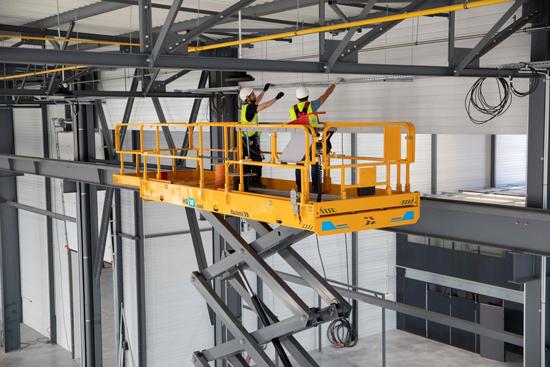
A 3A MEWP is a machine where the work platform moves vertically while remaining within the tipping lines of the machine chassis.
These are commonly known as:
- Scissor lifts
- Vertical mast lifts
Key Characteristics of 3A MEWPs
- Vertical lifting movement
- Platform stays inside the wheelbase
- Suitable for flat and stable surfaces
- Ideal for indoor and outdoor vertical access work
- Usually provides larger working platforms
Examples of 3A MEWPs
Advantages of 3A MEWPs
- Excellent platform stability
- Large working area for tools and materials
- Easier operation and control
- Good for straight-up access tasks
- Higher lifting capacities
Limitations
- Limited horizontal outreach
- Requires direct access below the work area
- Less effective around obstacles
What is a 3B MEWP?
A 3B MEWP is a machine where the platform extends beyond the tipping lines of the chassis. These machines provide both vertical and horizontal outreach.
These are commonly known as:
- Boom lifts
- Cherry pickers
- Articulating boom lifts
- Telescopic boom lifts
Key Characteristics of 3B MEWPs
- Horizontal outreach capability
- Ability to work around obstacles
- Greater flexibility at height
- Suitable for complex access areas
- Can reach difficult locations
Examples of 3B MEWPs
Advantages of 3B MEWPs
- Excellent reach and flexibility
- Can access difficult or obstructed areas
- Suitable for outdoor and large-scale projects
- Greater working height capabilities
Limitations
- Requires more operator skill
- Higher risk due to outreach movement
- Needs careful ground assessment
- Typically more expensive
Difference Between 3A and 3B MEWPs
| Feature | 3A MEWP | 3B MEWP |
|---|---|---|
| Movement Type | Vertical only | Vertical + Horizontal |
| Typical Equipment | Scissor Lift | Boom Lift |
| Outreach Capability | No | Yes |
| Stability | Very stable | Requires more monitoring |
| Best Use | Straight-up access | Access around obstacles |
| Training Complexity | Moderate | Higher |
| Indoor Usage | Excellent | Limited in some models |
Safety Considerations for MEWP Operations
Regardless of category, safe operation of MEWPs is essential.
Important Safety Practices
Pre-Use Inspection
Operators should inspect:
- Tires and wheels
- Guardrails
- Emergency controls
- Hydraulic systems
- Battery or fuel systems
- Fall protection points
Ground Conditions
Always ensure:
- Stable and level ground
- No underground voids
- Proper load-bearing capacity
- No excessive slopes
Fall Protection
For many 3B boom-type MEWPs, operators should use:
- Full body harness
- Energy-absorbing lanyard
- Approved anchor point
MEWP Safety in Action
Weather Monitoring
Avoid operating MEWPs during:
- High winds
- Lightning storms
- Heavy rain
- Poor visibility conditions
Choosing the Right MEWP
Selecting the correct machine depends on:
- Working height required
- Horizontal outreach needed
- Surface conditions
- Indoor or outdoor usage
- Load capacity requirements
- Site restrictions
Choose 3A MEWP When:
- Work is directly overhead
- Larger platform space is needed
- Indoor work is involved
- Ground is flat and stable
Choose 3B MEWP When:
- Obstacles block direct access
- Horizontal reach is necessary
- Outdoor construction work is involved
- Complex elevated access is required
Importance of MEWP Training
Proper operator training significantly reduces accidents and improves operational efficiency.
Training typically covers:
- Machine familiarization
- Safe operating procedures
- Emergency lowering systems
- Risk assessment
- Rescue procedures
- Pre-use inspection
Organizations should ensure operators are trained according to internationally recognized standards and local regulations.
Conclusion
Both 3A and 3B MEWPs play vital roles in modern work-at-height operations. While 3A machines are ideal for straightforward vertical access, 3B machines offer the flexibility needed for challenging work environments.
Understanding their differences helps companies:
- Improve safety
- Increase efficiency
- Reduce downtime
- Select the correct equipment for each task
Choosing the right MEWP and ensuring proper operator training are key steps toward safer and more productive worksites.